>

블로그/뉴스

>

What Is a Child-Resistant Tin and How Does It Work

What Is a Child-Resistant Tin and How Does It Work

목차

Defining What is CR Tin (Basics) sourcing determines whether your packaging passes strict regulatory scrutiny or triggers immediate compliance recalls. Depending on simple friction-fit lids for restricted items exposes your brand to severe legal liability and halts market entry.

This analysis benchmarks push-and-turn and squeeze-and-release closures against ASTM F1272 and 16 CFR 1700.20 protocols. We evaluate the mandatory 85 percent child failure rate and 90 percent adult accessibility metrics to help you secure legally compliant metal packaging.

What Is a Child-Resistant Tin?

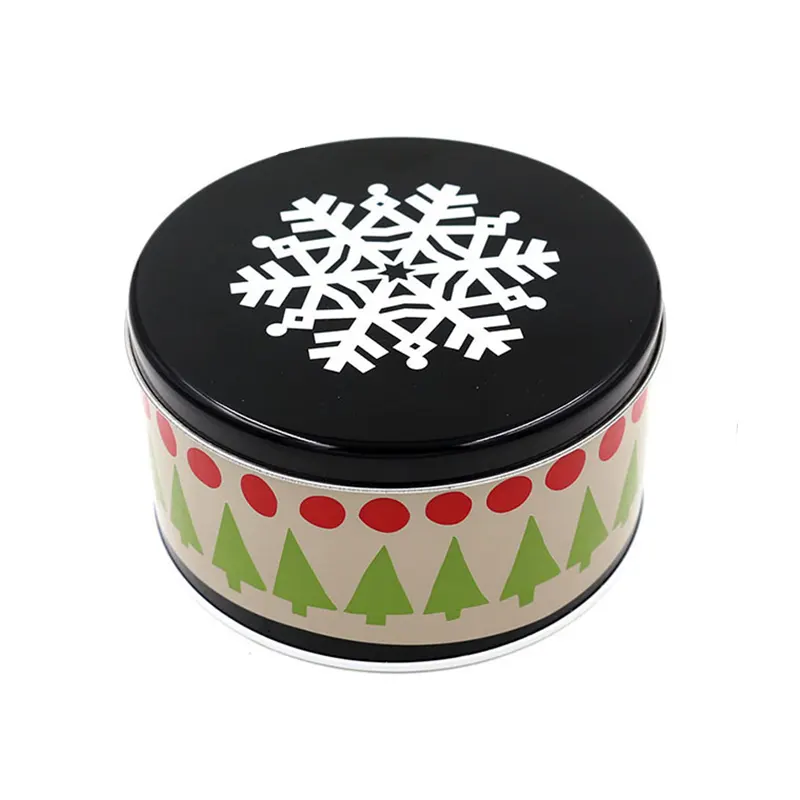
TMI942 85x85x30mmH 1 1

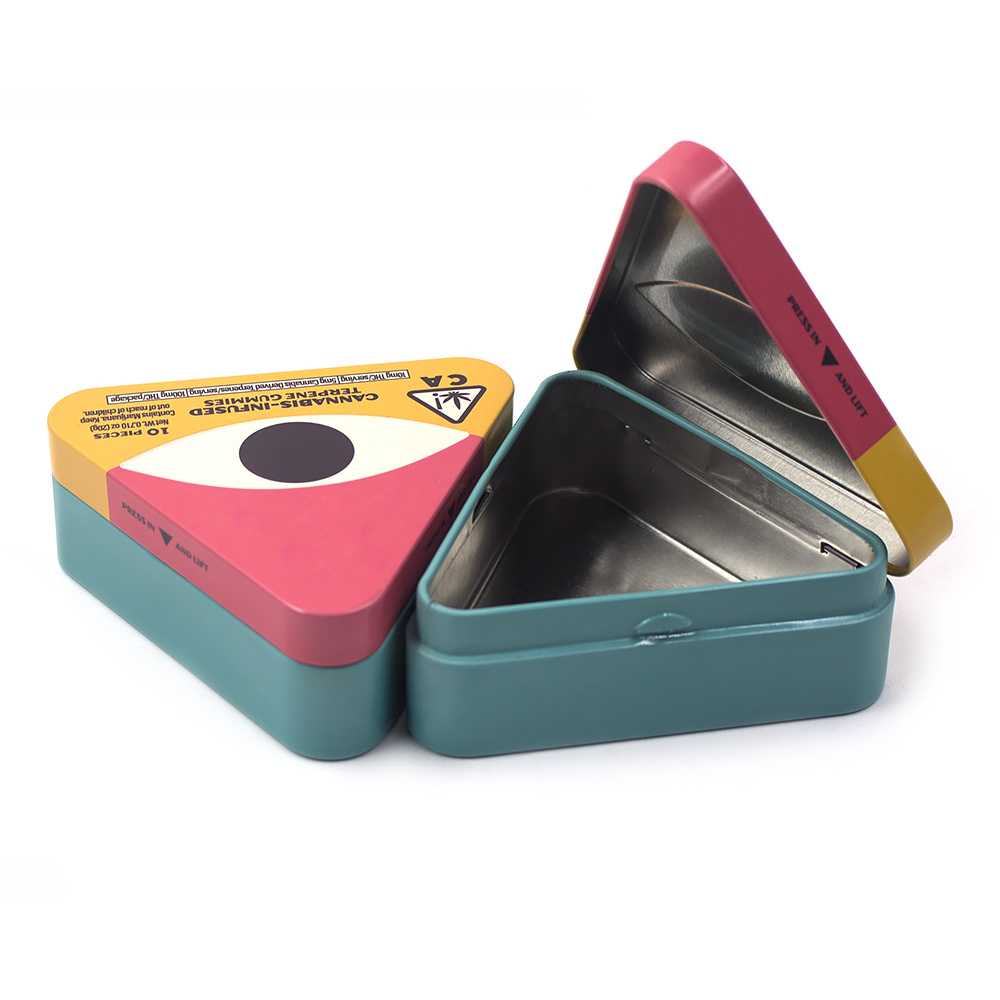
A child-resistant tin is a metal container engineered with a specialized closure to prevent access by children under five while remaining easy for adults to open and reclose.

Functional Definition and Safety Purpose

Manufacturers build child-resistant (CR) tins with integrated safety closures. The primary goal is blocking young children from accessing hazardous contents like pharmaceuticals, cannabis, and nicotine products.

Regulators set strict definitions for this packaging. A compliant container must be significantly difficult for children under five to open within a specific timeframe, but simple enough for adults to operate daily. Testing agencies verify this performance using established protocols.

  • Standard Compliance: The packaging must meet standards like 16 CFR 1700.20 ISO 8317.
  • Child Panel Requirements: The closure must prevent at least 85% of children from opening it.
  • Adult Usability: The design must allow 90% of adults to successfully open and reclose it.

Core Physical Features and Mechanisms

The core design relies on a solid tinplate or coated steel body paired with a mechanical barrier. This barrier demands adult-level dexterity or a series of coordinated steps to bypass.

Engineers integrate several closure styles to ensure young users cannot intuitively operate the packaging:

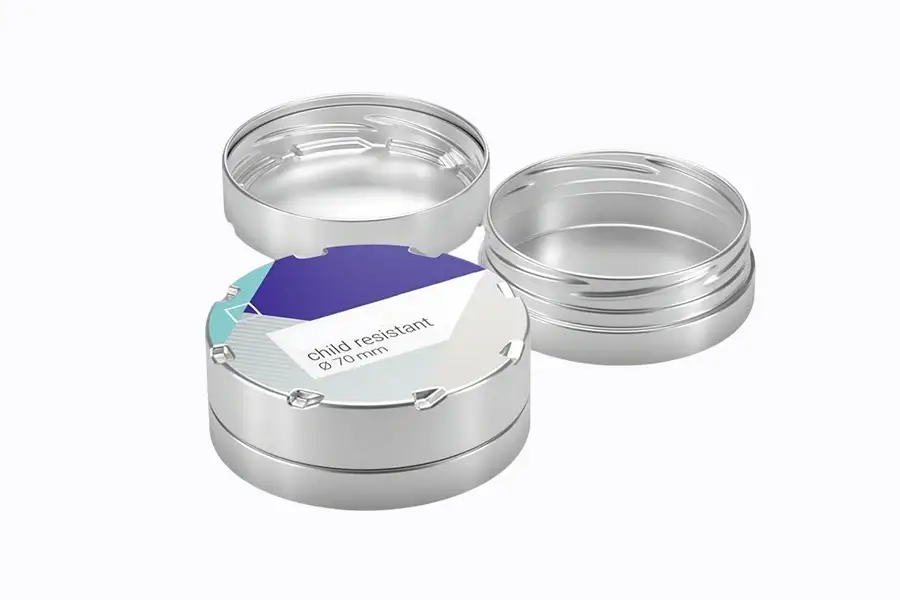
  • Push-and-turn screw caps: Demand simultaneous downward pressure and rotation.
  • Press-and-slide lids: Require specific directional force to unlock the cover.
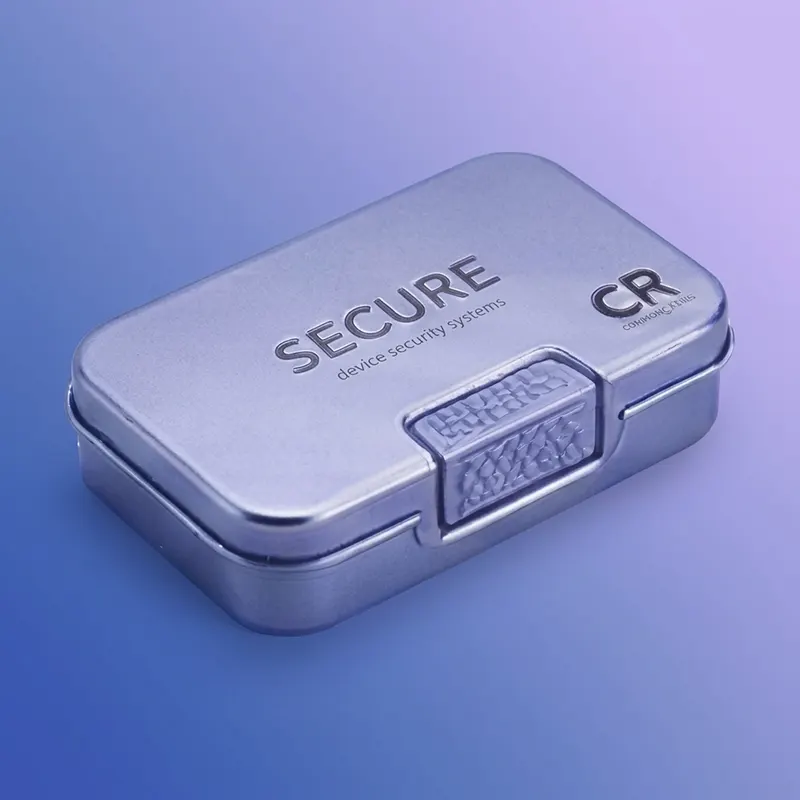
  • Hidden button-release latches: Use recessed hardware that requires dual-point contact.

A true CR tin survives heavy usage. The locking mechanisms remain fully functional and reclosable after repeated use, protecting the contents while maintaining strict safety compliance from the first open to the last.

How Child-Resistant Tin Mechanisms Work

Child-resistant tins replace simple lids with multi-step locks. These mechanisms block children under 52 months by demanding simultaneous cognitive and physical actions that adults perform easily.

Mechanism Type Action Count Primary Motion
Push-and-Turn Two-step Downward pressure + rotation
Squeeze-and-Release Two-step Inward compression + lift/twist
Dual-Button Hinge Two-step Pinch buttons + lift lid
Sliding Lock Three-step Press bilateral detents + drag horizontal

Core Principles of Intentional Complexity

Child-resistant systems discard single-action closures entirely. They replace them with multi-step opening sequences that demand two or more coordinated movements at the exact same time. This intentional complexity acts as a robust physical and cognitive shield.

  • Physical Thresholds: The mechanisms rely on fine motor skills, bilateral coordination, and specific hand strength profiles that usually exceed the physical capabilities of children under 52 개월.
  • Cognitive Barriers: Designs integrate spatial puzzles, requiring users to interpret visual cues, align specific marks, or follow directional text to disengage the lock.
  • Ergonomic Calibration: Engineers carefully calibrate detent forces and grip ergonomics so adults easily apply the required torque and axial load without needing specialized tools.

Common Locking Mechanisms in CR Tins

Packaging engineers adapt these core principles into several distinct formats. The choice of closure depends heavily on the packaging profile and the specific user experience the brand wants to deliver.

  • Push-and-Turn Lids: These utilize a two-part closure system. Downward pressure couples an outer shell with an inner ring, allowing the user to rotate lugs past internal locking ramps.
  • Squeeze-and-Release Closures: These integrate flexible tabs directly into the body. Users compress the tabs inward to disengage internal catches before they lift or twist the top.
  • Dual-Button Hinges: This design features a lock embedded in the front edge of a hinged box. Users pinch two buttons simultaneously to retract an internal hook latch.
  • Sliding Tin Mechanisms: These flat formats mandate three coordinated actions. They force users to press detents on both sides while dragging the cover horizontally to access the contents.

규제 대상 브랜드에 대한 인증된 어린이 보호 통

Protect your products and brand reputation with our CPSC and ASTM-certified child-resistant metal tins. Access our pre-certified molds and direct factory pricing to scale your packaging cost-effectively.

인증된 CR 주석 보기 →

CTA 이미지

Key Components of Child-Resistant Tins

Child-resistant tins combine specialized two-step locking closures with durable metal bodies and airtight seals to pass strict safety standards while protecting sensitive contents.

Core Physical Mechanisms and Materials

To achieve certified child resistance, metal packaging relies on precise engineering rather than basic friction-fit lids. Manufacturers build these containers from the ground up using specific materials and mechanical barriers.

  • Closure Mechanisms: Designs utilize coordinated actions like push-and-turn, squeeze-and-pull, or press-and-lift, requiring two-step motions that young children cannot easily replicate.
  • Tin Body and Lid Construction: Manufacturers use durable tinplate steel or aluminum, ensuring a precise fit between the body and lid to maintain locking functionality over repeated open and close cycles.
  • Liners and Seals: Inner foil or polymer seals provide airtightness and moisture resistance, working in tandem with the closure cap to preserve product freshness.

Safety Enhancements and Compliance Features

Beyond the physical lock, compliant packaging integrates layers of security and visual controls to satisfy federal and international regulations for hazardous or regulated goods.

  • Tamper-Evident Elements: Systems often include reinforced walls or evidence-of-first-opening features to secure regulated items like pharmaceuticals and cannabis.
  • Opacity and Visibility Controls: Opaque construction prevents visual identification of the contents, meeting strict regulatory demands for privacy and hazard reduction.
  • Labeling and Certification Requirements: Complete package systems undergo rigorous testing to meet standards like ASTM F1272 or 16 CFR §1700.20, and incorporate designated space for mandatory hazard warnings.

Testing and Certification Standards for Child-Resistant Tins

Validating a child-resistant tin requires rigorous panel testing under ASTM, CPSC, and ISO protocols. Any physical change to the container mandates immediate third-party retesting to maintain legal compliance.

우리를. and International Certification Protocols

Brands entering regulated markets cannot rely on generic safety claims. Regulatory bodies demand strict adherence to formalized testing protocols to prove a tin is child-resistant. 우리를. regulations rely on 16 CFR §1700.20 and ASTM F1272 to evaluate reclosable child-resistant packaging. European and global markets use the EN ISO 8317 standard to govern reusable tins for pharmaceuticals and hazardous contents.

Labs determine certification status by measuring closure performance against two specific demographic groups:

  • Child test panels: Evaluators give children aged 42 에게 51 months up to 10 minutes to open the tin. The packaging requires at least an 85% failure rate to pass.
  • Adult test panels: The standard requires at least 90% of adults aged 50 에게 70 years to successfully open and properly reclose the tin within 5 minutes.

Third-Party Testing and Ongoing Compliance Requirements

A self-certified safety claim holds zero weight. Brands must secure formal test reports from ISO 17025-accredited laboratories to validate child-resistant claims. Buyers need recent documentation detailing the specific tin material, 치수, and closure type tested to satisfy regulators and retailers.

Maintaining valid certification requires strict control over the manufacturing supply chain and material safety:

  • Mandatory retesting: Changing the tin gauge, internal components, or coating systems alters performance metrics and triggers mandatory retesting.
  • Food-contact migration: Safety compliance extends beyond closures, requiring metal tins to pass food-contact migration tests.
  • Heavy metal screening: The metal substrate and internal coatings must pass strict heavy metal screening to ensure they meet toxicity limits.

Senior-Friendly Features in Child-Resistant Tin Design

Balancing child resistance with senior accessibility requires engineered designs that replace high-force barriers with smart ergonomics, clear sensory guides, and consistent mechanical performance.

Ergonomics and Motion Mechanics for Older Hands

Manufacturers engineer child-resistant mechanisms to require a precise, moderate opening force. This targeted resistance ensures adults dealing with reduced grip strength or mild arthritis can easily access the contents without fighting the packaging.

  • Large contact surfaces: Designs rely on broad panels or extended corners rather than small, precise tabs that demand high finger dexterity.
  • Simplified two-step actions: Effective packaging uses straightforward motions like a press-and-lift or squeeze-and-slide to minimize physical strain and keep the cognitive load manageable.

Visual and Tactile Cues for Accessibility

Aging consumers often face declining visual acuity and tactile sensitivity. To bridge this gap, packaging designers embed physical sensory cues directly into the metal structure to guide the user naturally.

  • Visual markers: Tins feature embossed arrows, distinct textures, and high-contrast finishes to direct users to the correct contact points without relying on tiny printed instructions.
  • Tactile feedback: Premium mechanisms deliver a positive tactile response, such as a distinct mechanical click. This confirms a successful actuation for individuals with limited vision or fine motor control.
  • Cycle consistency: Structural designs keep the opening resistance stable over hundreds of uses. The closure avoids degrading, jamming, or turning overly rigid after repeated daily opening.

Common Uses for Child-Resistant Tins

Child-resistant tins secure hazardous and highly regulated products across multiple industries, combining strict legal compliance with durable metal packaging.

Pharmaceuticals, 건강, and Cannabis Applications

In highly regulated sectors, packaging must satisfy stringent child-safety laws like the Poison Prevention Packaging Act (PPPA) while giving adults reliable, long-term access to sensitive products.

  • Pharmacies and clinics: Package prescription drugs, over-the-counter medications, and daily wellness packs in CR tins for safe, repeatable access.
  • Supplement brands: Secure high-dose vitamins, nutraceuticals, and functional gummies in metal containers to prevent accidental overdoses.
  • Cannabis dispensaries: Rely on these tins for cannabis pre-rolls, 식용, and concentrates to meet strict child-safety compliance and control odors.
  • Nicotine manufacturers: House nicotine liquids, smokeless tobacco, and lozenges in rigid tins to minimize poisoning risks from toxic ingestibles.

Household Chemicals, 화장품, and Consumer Goods

The risk of accidental ingestion extends beyond medicine. Brands producing concentrated household items and specialized adult products rely on child-resistant tins to block access to materials that pose direct physical or chemical hazards.

  • Household chemicals: Companies package concentrated cleaning tablets, laundry pods, and garden chemicals in tins to block child access to corrosive materials.
  • 화장품: Brands store medicated balms, strong essential oil blends, and infused topicals safely in resealable metal containers.
  • Consumer packaged goods: Food producers secure adult-oriented specialty candies, strong breath mints, and caffeinated edibles using built-in CR mechanisms.
  • Hardware and small parts: Consumers organize small choking hazards and sharp items like batteries, 나사, and needles securely away from young children.

올바른 어린이 보호 통을 선택하는 방법

Choosing the right child-resistant tin requires balancing strict regulatory compliance with adult accessibility. Match dimensions to your product and ensure the closure survives repeated use without frustrating seniors.

Evaluating Product Fit and Compliance Standards

Getting the dimensions right is your first priority. You need to match the internal volume of the tin directly to your specific product type. If you pack cannabis pre-rolls, 의약품, or household chemicals in a poorly sized container, you create excess headspace that allows product movement and damage. A fit that is too tight makes closing the tin difficult and risks crushing the contents.

Once you nail down the size, you must secure the correct regulatory documentation. Regulators do not accept generic safety claims. You need documented proof that an accredited third-party lab tested your exact tin format and closure mechanism against local legal frameworks. Key testing certifications include:

  • ASTM F1272: Covers reclosable packaging and acts as the primary standard for the U.S. cannabis market.
  • 16 CFR §1700.20: The CPSC protocol required for U.S. 의약품, pesticides, and hazardous household products.
  • ISO에서 8317: The mandatory standard for reclosable child-resistant packaging in European markets.

Assessing Closure Durability and User Experience

A child-resistant mechanism must survive the entire lifespan of the product. Cheap closures often wear out or lose tension after just a few uses, rendering the safety feature useless. We recommend manually testing any potential mechanism through at least 30 open-and-close cycles. This physical stress test confirms that the closure maintains consistent resistance from the first use to the last. It also verifies that the tin retains its airtightness and odor containment, which is critical for volatile products like cannabis extracts or harsh chemicals.

Safety mechanisms also need to make sense to your adult buyers. You must balance strict child resistance with everyday adult accessibility. Select closures that seniors can operate intuitively without requiring excessive hand strength. Many brands make the mistake of using bulky external buttons that confuse older users and consume valuable exterior space. Choose structurally integrated mechanisms that keep the package accessible for adults while preserving your maximum printable surface area for mandatory compliance labels and brand artwork.

자주 묻는 질문

What is a CR tin?

A child-resistant (CR) tin is a metal container—typically tinplate steel or aluminum—engineered with a certified closure mechanism. This design stops young children from accessing the contents while remaining simple for adults to operate. Brands rely on these tins to package regulated items like cannabis products, prescription medications, and hazardous household chemicals.

How does a child-resistant tin work?

The resistance comes from the opening sequence, not the metal shell. The locking mechanisms require simultaneous actions or fine motor coordination, such as push-and-turn, squeeze-and-lift, or two-point contact designs. Young children lack the dexterity and cognitive development to perform these dual actions, which successfully blocks accidental access.

Are CR tins actually effective at preventing child access?

예. Properly engineered and certified CR tins actively block child access. Independent labs evaluate them against strict regulatory standards like ASTM F1272. To pass, the packaging must thwart at least 85% of children under five from opening it, while allowing at least 90% of adults to open and reseal it without instructions. Premium models integrate the locking mechanism directly into the tin’s physical structure, maintaining consistent resistance across hundreds of open-and-close cycles.

What is the difference betweenchild-resistant” 그리고 “child-proof”?

Child-resistantis a formal, legally recognized certification status proving the packaging passed strict, third-party safety testing. “Child-proofis an informal marketing term carrying zero regulatory weight. Regulators actively avoid the wordchild-proofbecause no packaging can guarantee zero access for every single child under all conditions.

How do you open a CR tin?

Opening a CR tin requires a deliberate, two-step action. For premium snap tins, you firmly squeeze two designated bottom corners simultaneously to release the internal locks, then lift the lid. For button or slide tins, you press the side button or slide panel while lifting or pulling the cover. Never use tools to pry them open, as prying permanently destroys the locking mechanism.

How do laboratories test CR packaging for compliance?

Accredited independent laboratories evaluate CR tins using live human panels. Following protocols like ASTM F1272 or the Poison Prevention Packaging Act (PPPA), testers watch groups of young children (usually 42 에게 51 months old) attempt to open the tin. They also verify that older adults (aged 50 에게 70) can open and reseal it within a five-minute time limit. The tin only earns certification if it hits the strict statistical benchmarks for both child safety and senior accessibility.

최종 생각

While generic metal packaging offers lower upfront costs, investing in certified child-resistant tins is the only way to safeguard your brand against regulatory fines and product recalls. Choosing a locking mechanism that balances strict legal compliance with senior accessibility secures your market position and builds lasting consumer trust. A verified CR container proves your commitment to safety and protects your bottom line in highly regulated industries.

Do not gamble on compliance—verify the engineering firsthand. We recommend requesting a sample order to run our certified locking mechanisms through your own physical stress tests. Contact our manufacturing team today to discuss your exact volume requirements and custom OEM specifications.

공유하다:

에릭 왕

Tin Men United Industry Limited의 총책임자

총책임자로서 틴맨 유나이티드 인두제한적, 저는 금속 포장 산업의 우수성을 위해 헌신하는 팀을 이끌게 된 것을 자랑스럽게 생각합니다.. 동관 소재, 중국, 우리는 프리미엄을 전문적으로 전달합니다, 식품 전반에 걸쳐 글로벌 브랜드를 위한 맞춤형 주석 상자 및 주석 캔 솔루션, 음료, 화장품, 및 판촉 부문.

Qingxi Town에 있는 당사 시설은 최첨단 제조 기술과 창의적인 혁신을 결합합니다.. 수년에 걸쳐, 우리는 다음과 같은 업계 거대 기업의 신뢰를 얻었습니다. 디즈니, 코카콜라, 레드불, 시바스 리갈, 립톤, 그리고 네슬레. 이러한 장기적인 파트너십은 품질에 대한 우리의 확고한 약속을 입증합니다., 설계, 그리고 믿을 수 있는 서비스.

우리는 R을 전문으로 합니다.&다양한 맞춤형 주석 솔루션 개발 및 제조, 차와 사탕통부터 프리미엄 선물 상자까지, 비스킷 통, 그리고 다양한 판촉용 포장. 전통적인 장인정신과 지속 가능한 포장 개념을 혼합하여, 우리는 고객이 브랜드 아이덴티티를 높이고 시장의 관심을 끌 수 있도록 돕습니다..

우리는 유통 업체를 따뜻하게 환영합니다, 브랜드 소유자, 전 세계 비즈니스 파트너와 협력 기회를 모색합니다.. 브랜드 가치를 진정으로 반영하는 포장을 만들기 위해 협력합시다..

무료 견적을 받으십시오

목차

whatsapp
×

카탈로그를 받으려면 저희에게 연락하십시오 & 인용하다

*귀하의 모든 정보는 존중됩니다 & Tin Men에서 보호됨.