Definición de qué es el estaño CR (Lo esencial) El abastecimiento determina si su embalaje pasa un estricto escrutinio regulatorio o desencadena retiradas de cumplimiento inmediatas.. Depender de tapas simples de ajuste por fricción para artículos restringidos expone a su marca a una responsabilidad legal grave y detiene la entrada al mercado..
Este análisis compara los cierres de empujar y girar y de apretar y soltar con ASTM F1272 y 16 CFR 1700.20 protocolos. Evaluamos lo obligatorio 85 porcentaje de fracaso infantil y 90 porcentaje de métricas de accesibilidad para adultos para ayudarle a proteger los envases metálicos que cumplen con la ley.
¿Qué es una lata a prueba de niños??
Una lata a prueba de niños es un recipiente de metal diseñado con un cierre especializado para evitar el acceso de niños menores de cinco años y al mismo tiempo sigue siendo fácil de abrir y cerrar para los adultos..
Definición funcional y finalidad de seguridad
Los fabricantes construyen dispositivos a prueba de niños. (CR) latas con cierres de seguridad integrados. El objetivo principal es impedir que los niños pequeños accedan a contenidos peligrosos como productos farmacéuticos., canabis, y productos de nicotina.
Los reguladores establecen definiciones estrictas para este embalaje. Un contenedor conforme debe ser significativamente difícil de abrir para niños menores de cinco años dentro de un período de tiempo específico., pero lo suficientemente simple para que los adultos lo operen diariamente. Las agencias de pruebas verifican este desempeño utilizando protocolos establecidos..
- Cumplimiento de estándares: El embalaje debe cumplir normas como 16 CFR 1700.20 y ISO 8317.
- Requisitos del panel infantil: El cierre deberá impedir al menos 85% de niños de abrirlo.
- Usabilidad para adultos: El diseño debe permitir 90% de adultos para abrirlo y volverlo a cerrar con éxito.
Características y mecanismos físicos básicos
El diseño del núcleo se basa en un cuerpo sólido de hojalata o acero revestido combinado con una barrera mecánica.. Esta barrera exige destreza a nivel de adulto o una serie de pasos coordinados para superarla..
Los ingenieros integran varios estilos de cierre para garantizar que los usuarios jóvenes no puedan operar el embalaje de forma intuitiva:
- Tapones de rosca de empujar y girar: Exige presión descendente y rotación simultáneas..
- Tapas que se presionan y deslizan: Requiere fuerza direccional específica para desbloquear la cubierta.
- Pestillos de liberación de botón ocultos: Utilice hardware empotrado que requiera contacto de doble punto.
Una verdadera lata CR sobrevive al uso intensivo.. Los mecanismos de bloqueo siguen siendo completamente funcionales y se pueden volver a cerrar después de un uso repetido., protegiendo el contenido manteniendo un estricto cumplimiento de seguridad desde la primera apertura hasta la última.
Cómo funcionan los mecanismos de estaño a prueba de niños
Las latas a prueba de niños reemplazan las tapas simples con cerraduras de varios pasos. Estos mecanismos bloquean a los niños menores 52 meses exigiendo acciones cognitivas y físicas simultáneas que los adultos realizan fácilmente.
| Tipo de mecanismo | Recuento de acciones | Movimiento primario |
|---|---|---|
| Empujar y girar | dos pasos | Presión hacia abajo + rotación |
| Apretar y soltar | dos pasos | Compresión hacia adentro + levantar/girar |
| Bisagra de doble botón | dos pasos | Botones de pellizco + levantar la tapa |
| Bloqueo deslizante | tres pasos | Presione retenes bilaterales + arrastrar horizontalmente |
Principios básicos de la complejidad intencional
Los sistemas a prueba de niños descartan por completo los cierres de acción simple. Los reemplazan con secuencias de apertura de varios pasos que exigen dos o más movimientos coordinados al mismo tiempo.. Esta complejidad intencional actúa como un sólido escudo físico y cognitivo..
- Umbrales físicos: Los mecanismos dependen de la motricidad fina., coordinación bilateral, y perfiles específicos de fuerza de las manos que generalmente exceden las capacidades físicas de los niños menores de 52 meses.
- Barreras cognitivas: Los diseños integran rompecabezas espaciales., Requerir que los usuarios interpreten señales visuales., alinear marcas específicas, o siga el texto direccional para desactivar el bloqueo.
- Calibración ergonómica: Los ingenieros calibran cuidadosamente las fuerzas de retención y la ergonomía del agarre para que los adultos apliquen fácilmente el torque y la carga axial requeridos sin necesidad de herramientas especializadas..
Mecanismos de bloqueo comunes en latas CR
Los ingenieros de embalaje adaptan estos principios básicos en varios formatos distintos.. La elección del cierre depende en gran medida del perfil del envase y de la experiencia de usuario específica que la marca quiera ofrecer..
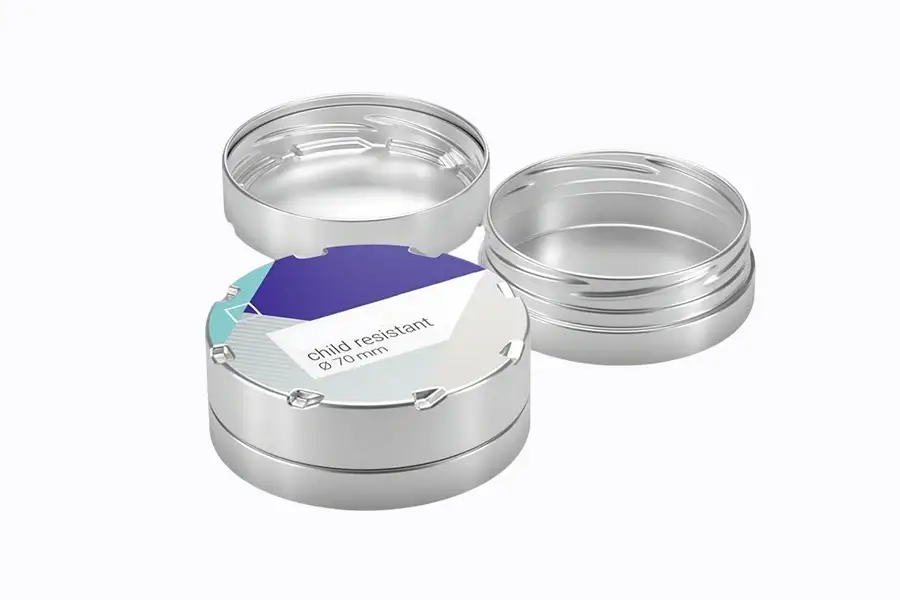
- Tapas de empujar y girar: Estos utilizan un sistema de cierre de dos partes.. La presión hacia abajo acopla una carcasa exterior con un anillo interior, permitiendo al usuario girar las orejetas más allá de las rampas de bloqueo internas.
- Cierres de apretar y soltar: Estos integran pestañas flexibles directamente en el cuerpo.. Los usuarios comprimen las pestañas hacia adentro para soltar los pestillos internos antes de levantar o girar la parte superior..
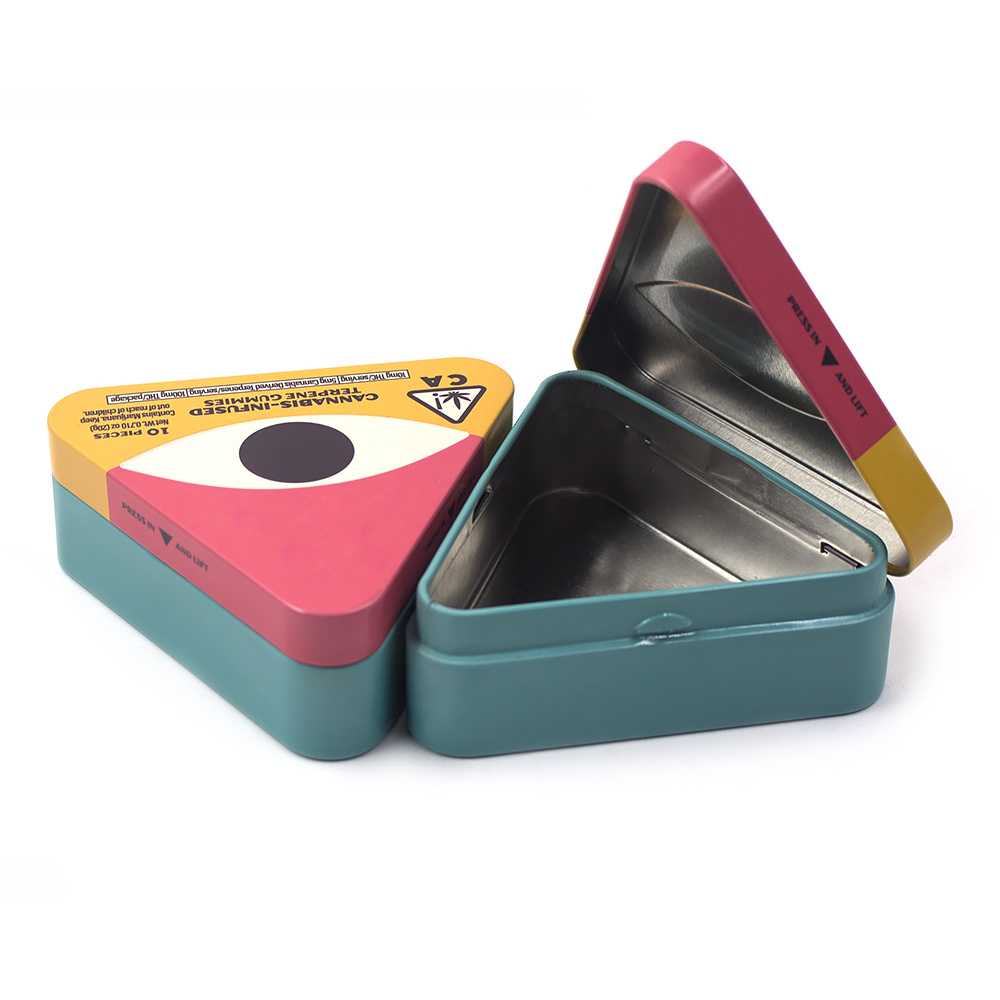
- Bisagras de doble botón: Este diseño presenta una cerradura incrustada en el borde frontal de una caja con bisagras.. Los usuarios presionan dos botones simultáneamente para retraer un pestillo de gancho interno.
- Mecanismos deslizantes de estaño: Estos formatos planos exigen tres acciones coordinadas. Obligan a los usuarios a presionar retenes en ambos lados mientras arrastran la cubierta horizontalmente para acceder al contenido..
Latas certificadas a prueba de niños para marcas reguladas

Componentes clave de las latas a prueba de niños
Las latas a prueba de niños combinan cierres de bloqueo especializados de dos pasos con cuerpos metálicos duraderos y sellos herméticos para cumplir con estrictos estándares de seguridad y al mismo tiempo proteger contenidos sensibles..
Mecanismos y materiales físicos básicos
Para conseguir una resistencia infantil certificada, Los envases metálicos se basan en ingeniería precisa en lugar de tapas básicas de ajuste por fricción.. Los fabricantes construyen estos contenedores desde cero utilizando materiales específicos y barreras mecánicas..
- Mecanismos de cierre: Los diseños utilizan acciones coordinadas como empujar y girar., apretar y tirar, o presionar y levantar, que requieren movimientos de dos pasos que los niños pequeños no pueden replicar fácilmente.
- Construcción de tapa y cuerpo de hojalata: Los fabricantes utilizan acero o aluminio de hojalata duraderos., asegurando un ajuste preciso entre el cuerpo y la tapa para mantener la funcionalidad de bloqueo durante ciclos repetidos de apertura y cierre.
- Revestimientos y sellos: Los sellos interiores de lámina o polímero proporcionan hermeticidad y resistencia a la humedad., trabajando en conjunto con la tapa de cierre para preservar la frescura del producto.
Mejoras de seguridad y características de cumplimiento
Más allá del bloqueo físico, El embalaje compatible integra capas de controles visuales y de seguridad para satisfacer las regulaciones federales e internacionales para mercancías peligrosas o reguladas..
- Elementos a prueba de manipulaciones: Los sistemas a menudo incluyen paredes reforzadas o características de prueba de primera apertura para proteger artículos regulados como productos farmacéuticos y cannabis..
- Controles de opacidad y visibilidad: La construcción opaca evita la identificación visual del contenido., Cumplir con estrictas demandas regulatorias de privacidad y reducción de riesgos..
- Requisitos de etiquetado y certificación: Los sistemas de paquetes completos se someten a pruebas rigurosas para cumplir con estándares como ASTM F1272 o 16 CFR §1700.20, e incorporar espacios designados para advertencias de peligro obligatorias.
Estándares de prueba y certificación para latas a prueba de niños
La validación de una lata a prueba de niños requiere pruebas rigurosas de paneles según ASTM, CPSC, y protocolos ISO. Cualquier cambio físico en el contenedor exige una nueva prueba inmediata por parte de terceros para mantener el cumplimiento legal..
A NOSOTROS. y Protocolos de Certificación Internacional
Las marcas que ingresan a mercados regulados no pueden confiar en declaraciones genéricas de seguridad. Los organismos reguladores exigen un estricto cumplimiento de los protocolos de prueba formalizados para demostrar que una lata es a prueba de niños.. A NOSOTROS. las regulaciones se basan en 16 CFR §1700.20 y ASTM F1272 para evaluar envases resellables a prueba de niños. Los mercados europeos y globales utilizan la norma EN ISO 8317 norma para regular las latas reutilizables para productos farmacéuticos y contenidos peligrosos.
Los laboratorios determinan el estado de la certificación midiendo el desempeño del cierre en comparación con dos grupos demográficos específicos.:
- Paneles de prueba infantiles: Los evaluadores dan a los niños de edad 42 a 51 meses hasta 10 minutos para abrir la lata. El embalaje requiere al menos una 85% tasa de fracaso para aprobar.
- Paneles de prueba para adultos: La norma requiere al menos 90% de adultos de edad 50 a 70 años para abrir y volver a cerrar correctamente la lata dentro de 5 minutos.
Pruebas de terceros y requisitos de cumplimiento continuo
Una declaración de seguridad autocertificada no tiene peso. Las marcas deben obtener informes de pruebas formales de laboratorios acreditados por ISO 17025 para validar las afirmaciones de seguridad para niños.. Los compradores necesitan documentación reciente que detalle el material de estaño específico., dimensiones, y tipo de cierre probado para satisfacer a los reguladores y minoristas.
Mantener una certificación válida requiere un control estricto sobre la cadena de suministro de fabricación y la seguridad de los materiales.:
- Nueva prueba obligatoria: Cambiar el calibre de estaño, componentes internos, o los sistemas de recubrimiento alteran las métricas de rendimiento y provocan nuevas pruebas obligatorias.
- Migración por contacto con alimentos: El cumplimiento de la seguridad se extiende más allá de los cierres, Requerir que las latas de metal pasen pruebas de migración en contacto con alimentos..
- Cribado de metales pesados: El sustrato metálico y los revestimientos internos deben pasar estrictos controles de metales pesados para garantizar que cumplan con los límites de toxicidad..
Características adaptadas a las personas mayores en un diseño de hojalata a prueba de niños
Equilibrar la resistencia de los niños con la accesibilidad de las personas mayores requiere diseños de ingeniería que reemplacen las barreras de alta fuerza con una ergonomía inteligente., guías sensoriales claras, y rendimiento mecánico constante.
Ergonomía y mecánica de movimiento para manos mayores
Los fabricantes diseñan mecanismos a prueba de niños para requerir una precisión, fuerza de apertura moderada. Esta resistencia específica garantiza que los adultos que padecen una fuerza de agarre reducida o artritis leve puedan acceder fácilmente al contenido sin tener que luchar contra el embalaje..
- Grandes superficies de contacto: Los diseños se basan en paneles anchos o esquinas extendidas en lugar de pequeños, pestañas precisas que exigen una gran destreza en los dedos.
- Acciones simplificadas de dos pasos: El embalaje eficaz utiliza movimientos sencillos como presionar y levantar o apretar y deslizar para minimizar la tensión física y mantener la carga cognitiva manejable..
Señales visuales y táctiles para la accesibilidad
Los consumidores de edad avanzada a menudo se enfrentan a una disminución de la agudeza visual y la sensibilidad táctil. Para cerrar esta brecha, Los diseñadores de envases incorporan señales sensoriales físicas directamente en la estructura metálica para guiar al usuario de forma natural..
- Marcadores visuales: Las latas tienen flechas en relieve., texturas distintas, y acabados de alto contraste para dirigir a los usuarios a los puntos de contacto correctos sin depender de pequeñas instrucciones impresas..
- Retroalimentación táctil: Los mecanismos premium ofrecen una respuesta táctil positiva, como un clic mecánico distintivo. Esto confirma una actuación exitosa para personas con visión limitada o control motor fino..
- Consistencia del ciclo: Los diseños estructurales mantienen estable la resistencia de apertura durante cientos de usos.. El cierre evita degradar, interferencia, o volverse demasiado rígido después de repetidas aperturas diarias.
Usos comunes de las latas a prueba de niños
Las latas a prueba de niños protegen productos peligrosos y altamente regulados en múltiples industrias, Combinando un estricto cumplimiento legal con embalajes metálicos duraderos..
Productos farmacéuticos, Salud, y aplicaciones del cannabis
En sectores altamente regulados, El embalaje debe cumplir estrictas leyes de seguridad infantil, como la Ley de embalaje para la prevención de intoxicaciones. (PPPA) mientras brinda a los adultos confianza, acceso a largo plazo a productos sensibles.
- Farmacias y clínicas: Paquete de medicamentos recetados, medicamentos sin receta, y paquetes de bienestar diarios en latas CR para mayor seguridad, acceso repetible.
- Marcas de suplementos: Vitaminas seguras en dosis altas, nutracéuticos, y gomitas funcionales en envases metálicos para prevenir sobredosis accidentales.
- Dispensarios de cannabis: Confía en estas latas para los pre-rollos de cannabis, comestibles, y concentrados para cumplir con estrictos requisitos de seguridad infantil y controlar los olores..
- Fabricantes de nicotina: Líquidos caseros de nicotina, tabaco sin humo, y pastillas en latas rígidas para minimizar los riesgos de intoxicación por ingeribles tóxicos.
Productos químicos domésticos, Productos cosméticos, y bienes de consumo
El riesgo de ingestión accidental va más allá de la medicina. Las marcas que producen artículos concentrados para el hogar y productos especializados para adultos dependen de latas a prueba de niños para bloquear el acceso a materiales que presentan peligros físicos o químicos directos..
- Productos químicos domésticos: Las empresas envasan pastillas limpiadoras concentradas, vainas de lavandería, y productos químicos de jardín en latas para bloquear el acceso de los niños a materiales corrosivos.
- Productos cosméticos: Tienda de marcas de bálsamos medicinales., mezclas fuertes de aceites esenciales, y tópicos infundidos de forma segura en recipientes metálicos con cierre.
- Bienes de consumo envasados: Los productores de alimentos obtienen dulces especiales para adultos, mentas fuertes para el aliento, y comestibles con cafeína que utilizan mecanismos CR incorporados.
- Hardware y piezas pequeñas.: Los consumidores organizan pequeños peligros de asfixia y objetos punzantes como pilas., tornillos, y agujas lejos del alcance de los niños pequeños.
Cómo elegir las latas adecuadas a prueba de niños
Elegir la lata adecuada a prueba de niños requiere equilibrar el estricto cumplimiento normativo con la accesibilidad de los adultos. Haga coincidir las dimensiones con su producto y asegúrese de que el cierre sobreviva al uso repetido sin frustrar a las personas mayores..
Evaluación de estándares de ajuste y cumplimiento de productos
Obtener las dimensiones correctas es su primera prioridad. Debe hacer coincidir el volumen interno de la lata directamente con su tipo de producto específico.. Si llevas pre-rolls de cannabis, productos farmaceuticos, o productos químicos domésticos en un recipiente de tamaño inadecuado, Crea un exceso de espacio libre que permite el movimiento y daño del producto.. Un ajuste demasiado apretado dificulta el cierre de la lata y corre el riesgo de aplastar el contenido..
Una vez que determines el tamaño, debe obtener la documentación reglamentaria correcta. Los reguladores no aceptan afirmaciones genéricas de seguridad. Necesita pruebas documentadas de que un laboratorio externo acreditado haya probado su formato exacto de lata y su mecanismo de cierre según los marcos legales locales.. Las certificaciones de pruebas clave incluyen:
- Norma ASTM F1272: Cubre envases que se pueden volver a cerrar y actúa como estándar principal para los EE. UU.. mercado de cannabis.
- 16 CFR §1700.20: El protocolo CPSC requerido para EE. UU.. productos farmaceuticos, pesticidas, y productos domésticos peligrosos.
- EN ISO 8317: La norma obligatoria para los envases resellables a prueba de niños en los mercados europeos.
Evaluación de la durabilidad del cierre y la experiencia del usuario
Un mecanismo a prueba de niños debe sobrevivir toda la vida útil del producto.. Los cierres baratos suelen desgastarse o perder tensión después de unos pocos usos., inutilizar el dispositivo de seguridad. Recomendamos probar manualmente cualquier mecanismo potencial mediante al menos 30 ciclos de apertura y cierre. Esta prueba de estrés físico confirma que el cierre mantiene una resistencia constante desde el primer uso hasta el último. También verifica que la lata conserve su hermeticidad y contención de olores., Lo cual es fundamental para productos volátiles como extractos de cannabis o productos químicos agresivos..
Los mecanismos de seguridad también deben tener sentido para los compradores adultos.. Debes equilibrar la estricta resistencia de los niños con la accesibilidad cotidiana de los adultos.. Seleccione cierres que las personas mayores puedan operar de forma intuitiva sin requerir una fuerza excesiva en las manos.. Muchas marcas cometen el error de utilizar botones externos voluminosos que confunden a los usuarios mayores y consumen un valioso espacio exterior.. Elija mecanismos estructuralmente integrados que mantengan el paquete accesible para adultos y al mismo tiempo preserven su superficie máxima imprimible para etiquetas de cumplimiento obligatorio y diseños de marca..
Preguntas frecuentes
¿Qué es una lata CR??
Un a prueba de niños (CR) La lata es un recipiente de metal, generalmente de acero de hojalata o aluminio, diseñado con un mecanismo de cierre certificado.. Este diseño evita que los niños pequeños accedan al contenido y al mismo tiempo sigue siendo sencillo de operar para los adultos.. Las marcas confían en estas latas para envasar artículos regulados como productos de cannabis., medicamentos recetados, y productos químicos domésticos peligrosos.
¿Cómo funciona una lata a prueba de niños??
La resistencia viene desde la secuencia inicial., no la carcasa de metal. Los mecanismos de bloqueo requieren acciones simultáneas o coordinación motora fina., como empujar y girar, apretar y levantar, o diseños de contacto de dos puntos. Los niños pequeños carecen de la destreza y el desarrollo cognitivo para realizar estas acciones duales., que bloquea con éxito el acceso accidental.
¿Son las latas CR realmente efectivas para prevenir el acceso de los niños??
Sí. Las latas CR certificadas y diseñadas adecuadamente bloquean activamente el acceso de los niños.. Laboratorios independientes los evalúan según estándares regulatorios estrictos como ASTM F1272.. pasar, el embalaje debe impedir al menos 85% de niños menores de cinco años al abrirlo, permitiendo al menos 90% de adultos para abrirlo y volverlo a cerrar sin instrucciones. Los modelos premium integran el mecanismo de bloqueo directamente en la estructura física de la lata., mantener una resistencia constante a lo largo de cientos de ciclos de apertura y cierre.
¿Cuál es la diferencia entre “a prueba de niños” y “a prueba de niños”?
“A prueba de niños” es un formal, estado de certificación legalmente reconocido que demuestra que el embalaje pasó estrictas, pruebas de seguridad de terceros. “A prueba de niños” es un término de marketing informal que no tiene peso regulatorio. Los reguladores evitan activamente la palabra “a prueba de niños” porque ningún embalaje puede garantizar el acceso cero para todos los niños en todas las condiciones.
¿Cómo se abre una lata CR??
Abrir una lata CR requiere una acción deliberada, acción de dos pasos. Para latas premium, aprietas firmemente dos esquinas inferiores designadas simultáneamente para liberar las cerraduras internas, luego levante la tapa. Para latas con botones o correderas, presiona el botón lateral o el panel deslizante mientras levanta o tira de la cubierta. Nunca use herramientas para abrirlos, ya que hacer palanca destruye permanentemente el mecanismo de bloqueo.
¿Cómo prueban los laboratorios el cumplimiento de los envases CR??
Laboratorios independientes acreditados evalúan latas CR utilizando paneles humanos vivos. Seguir protocolos como ASTM F1272 o la Ley de embalaje para la prevención de intoxicaciones. (PPPA), Los probadores observan grupos de niños pequeños. (generalmente 42 a 51 meses de edad) intenta abrir la lata. También verifican que los adultos mayores (viejo 50 a 70) Puede abrirlo y volver a cerrarlo en un plazo de cinco minutos.. La lata solo obtiene la certificación si cumple con estrictos estándares estadísticos tanto en materia de seguridad infantil como de accesibilidad para personas mayores..
Pensamientos finales
Mientras que los envases metálicos genéricos ofrecen costos iniciales más bajos, Invertir en latas certificadas a prueba de niños es la única forma de proteger su marca contra multas regulatorias y retiradas de productos.. Elegir un mecanismo de bloqueo que equilibre el estricto cumplimiento legal con la accesibilidad para personas mayores asegura su posición en el mercado y genera una confianza duradera en el consumidor.. Un contenedor CR verificado demuestra su compromiso con la seguridad y protege sus resultados en industrias altamente reguladas.
No apueste por el cumplimiento: verifique la ingeniería de primera mano. Recomendamos solicitar un pedido de muestra para ejecutar nuestros mecanismos de bloqueo certificados a través de sus propias pruebas de estrés físico.. Póngase en contacto con nuestro equipo de fabricación hoy para analizar sus requisitos de volumen exactos y especificaciones OEM personalizadas..